Do you suffer from dry cracked hands? Do you carry around a little bottle or hand sanitizer gel, or keep them in your car, around the house, etc? Do you know that the main ingredient in these gels is alcohol?
Habitually putting these hand sanitizer alcohol based gels on your hands can really dry out your skin causing rough, and painful chafing and cracking. If you are worried about germs, did you know that properly washing your hands with regular, not even anti-bacterial soap, is just as effective at killing and removing germs as all that expensive anti-bacterial stuff? All this anti-bacterial everything really is not helping anything except contributing to building up the defenses of super germs and bacteria that eventually become resistant to these products, while severely drying out your skin.
Instead of grabbing the anti-bacterial hand gel or anti-bacterial soap, opt for the simple old fashioned soap hand washing, if it's available. It might seem like a simple thing, but surprisingly, most people do not know how to properly wash their hands to make it most effective. Here is a good article that breaks it down as a simple reminder we call can use. 5 Steps to Effective Hand-Washing
The best non-drying soaps are cold processed super-fatted soaps containing ingredients such as goats milk, olive oil, shea butter, or jojoba, just to mention a few. These true soaps typically contain excess oils, which have not been converted to soap that help moisturize and clean at the same time. Most mass produced conventional "soap" bars are really detergent bars. Many times the manufactures remove the moisturizing natural occurring glycerin produced during the soap making process and turn it into lotion, which is then resold as a separate product for a much higher price per ounce. These "detergent bars" can also cause your skin to dry out with excess use, since it also removes the natural oils in your skin as it washes away the dirt and germs.
If you prefer liquid soaps, don't go for the clear soaps. These may be pretty, but they can also be contributing to your dry skin. These clear soaps do not contain any excess oils which have not been saponified, or turned into soap. That is why they are clear. Instead, opt for the others you cannot see through. These typically are more moisturizing since the excess unsaponified oils give them a more creamy appearance.
In addition to some wonderful natural lotions now available, you can also try some home remedies you might already have in your kitchen to keep your hands and skin protected and moisturized. After washing or soaking your hands, apply a little olive oil or coconut oil to your hands. You don't need much or you won't be able to open a door knob for a while. :o) Just a drop or two will help seal in the moisture and absorb into your skin helping to heal and prevent those dreaded dry and cracking hands. An extra rub into your cuticles works great, too. If you happen to have any tamanu oil, which I went into more detail in a previous post Must Have for your Medicine Cabinet, this will really help speed up the healing process of dry cracked hands and protect your skin at the same time.
Showing posts with label cleaning. Show all posts
Showing posts with label cleaning. Show all posts
Friday, January 27, 2012

Wednesday, January 25, 2012
Homemade Laundry Soap
I know some of you have been waiting patiently for this post, so here it goes. I don't know about you, but it used to kill me to drop $20 or more to get the large economy size HE name brand laundry detergent at my local big box membership club. I had tried some of the cheaper brands, but was not very happy with their cleaning ability. I was also not very happy to be paying for a large percentage of water or fillers in the formula and many chemicals that are not earth friendly. I have a septic system at my house, and I was told by a septic repair man that one of the worst things you can put into your septic system is household detergents, mainly laundry, dish washing detergents, and bleach. The main active chemical ingredients throw off the natural balance of good bacteria, which is the key to a properly working, trouble free system.
Over several months time, and giving samples to family and friends to try and get their feedback, I have come up with a formula that I have been using for several years. When I first started making it, I used store bought soap bars made specifically for laundry use. Since I now make my own cold process soap, I now make my own bar soap to grate for my laundry soap. For those of you interested in experimenting with soap making, I'll share that recipe in a later post. For those of you not quite ready to jump in and make your own bar soap, the store bought laundry bars, such as Fels Naptha or Zote Soap, will work just fine for this recipe.
Homemade Laundry Soap
I make laundry soap in an old food processor. If you don't have one, a box grater will work well to grate your bar soap. It will just take longer. Some say the rhythm of the grating process is therapeutic. Personally, I would rather get it done fast so I can move on to other things. I first slice the bars into small enough strips to feed into the top feed tube. Allowing them to dry for a few hours at this point will also help the shredding go a little easier. Then I shred it with a shred disk you might use for carrots or cheese, then set the shredded soap aside. After all my soap bars are shredded, I measure out my recipe in the food processor with the chopping blade at the bottom. Give the whole batch several long pulses until it is all well blended and it is ready to go. I store mine in an old 5 gallon paint bucket, even a re-purposed cat litter container would be perfect, as long as it has a lid to keep moisture levels down. As you can see by the size container I use, when I make my laundry soap, I make a big batch, so I will have enough to last me several months.
All of these ingredients you should be able to find in your local big box store, or even your grocery store, but I shopped around for the best prices on each item. One ingredient in particular, sodium carbonate (NOT sodium BI-carbonate), AKA washing soda or soda ash, is typically found in the laundry aisle, but I found an even cheaper, more obscure place to purchase it. Believe it or not, soda ash is an ingredient used to make some glaze formulations in ceramics. If you have a ceramics supply house near by, you might be able to buy soda ash by the pound from them way cheaper than in the laundry aisle. It works good for other cleaning purposes, as it is also sold as washing soda. It is also the same active ingredient in coffee machine cleaners you would typically pay several dollars for a small 8 oz container. Mix it 1 tablespoon to 4 cups of water and you have another money saving use to keep your coffee maker clean. Just make sure to run 3 batches of clean water through your machine afterwards to rinse out the cleaner solution.
If you are worried if this laundry soap recipe will work in an HE machine, don't. This is a very low suds formula that works great in HE machines as well as regular machines. When I had people test my formula, I had people with both kinds of machines try it with great results. It also works great for baby clothes and people with sensitivities to many laundry product additives. I only had one person complain it bothered her, but later found out she has sensitivities to baking soda. You can also make the recipe without baking soda, but here in Florida with the harder water, it really seems to help soften the water and help with the rinsing. Tweak the formula for your water conditions and see what works best for you.
If you are finding bits of soap left undissolved after the wash, you are likely using too much. If you are used to store brands, the amount of this recipe you need will seem like too small of an amount to get the job done. Keep in mind, most conventional store brands include water or other fillers to make it looks like you are getting more for your money. When you strip it down to the essential cleaners you really don't need much. I have seen other on-line recipes dissolve or cook their soap formula to make a liquid soap. I guess you could also do that, but who wants the extra work, plus it will just take up more room with the added water.
Speaking of other online formulas for laundry soap, many will recommend using left over scraps of regular bar soap you might use for washing your hands or your body. Don't do it. These bars are mostly either detergent bars, since in production the skin friendly glycerin is removed to sell for a higher price in lotions, or the bar is what they call "super-fatted." If you don't already know, soap is made by chemically changing the physical properties of oils, butters, or fats into soap using lye, also known as sodium hydroxide. In soap speak, super-fatting soap means having excess oils added to the soap that do not completely saponify, or turn into soap, during the chemical and curing process. These unsaponfied oils are great for moisturizing your skin, but not so good for your laundry. Excess oils will build up on your clothes and in your machine over time. Not good! Please use only soap designed for laundry purposes or cold process soap that is not super-fatted. Lard or tallow based soaps also seem to work a bit better than vegetable oil based soaps, in my opinion. Over time, the vegetable based soaps seemed to make my whites a little dingy.
I hope this post has been worth the wait, and you now have a whole new insight to your laundry. It may be far more than you ever thought you would know about soap or laundry, but typically knowing too much is far better than not knowing enough. :o) Please post your comments and results, so if you have tweaked your formula for different parts of the country others can also benefit from your findings.
Over several months time, and giving samples to family and friends to try and get their feedback, I have come up with a formula that I have been using for several years. When I first started making it, I used store bought soap bars made specifically for laundry use. Since I now make my own cold process soap, I now make my own bar soap to grate for my laundry soap. For those of you interested in experimenting with soap making, I'll share that recipe in a later post. For those of you not quite ready to jump in and make your own bar soap, the store bought laundry bars, such as Fels Naptha or Zote Soap, will work just fine for this recipe.
Homemade Laundry Soap
- Roughly 2 1/2 cups loosely packed grated laundry soap bar (see note below)
- 1 cup washing soda (AKA soda ash, or sodium carbonate)
- 1/2 cup borax
- 1/2 cup baking soda (AKA sodium bi-carbonate)
- A few drops of Essential oils of your choice (optional)
I make laundry soap in an old food processor. If you don't have one, a box grater will work well to grate your bar soap. It will just take longer. Some say the rhythm of the grating process is therapeutic. Personally, I would rather get it done fast so I can move on to other things. I first slice the bars into small enough strips to feed into the top feed tube. Allowing them to dry for a few hours at this point will also help the shredding go a little easier. Then I shred it with a shred disk you might use for carrots or cheese, then set the shredded soap aside. After all my soap bars are shredded, I measure out my recipe in the food processor with the chopping blade at the bottom. Give the whole batch several long pulses until it is all well blended and it is ready to go. I store mine in an old 5 gallon paint bucket, even a re-purposed cat litter container would be perfect, as long as it has a lid to keep moisture levels down. As you can see by the size container I use, when I make my laundry soap, I make a big batch, so I will have enough to last me several months.
All of these ingredients you should be able to find in your local big box store, or even your grocery store, but I shopped around for the best prices on each item. One ingredient in particular, sodium carbonate (NOT sodium BI-carbonate), AKA washing soda or soda ash, is typically found in the laundry aisle, but I found an even cheaper, more obscure place to purchase it. Believe it or not, soda ash is an ingredient used to make some glaze formulations in ceramics. If you have a ceramics supply house near by, you might be able to buy soda ash by the pound from them way cheaper than in the laundry aisle. It works good for other cleaning purposes, as it is also sold as washing soda. It is also the same active ingredient in coffee machine cleaners you would typically pay several dollars for a small 8 oz container. Mix it 1 tablespoon to 4 cups of water and you have another money saving use to keep your coffee maker clean. Just make sure to run 3 batches of clean water through your machine afterwards to rinse out the cleaner solution.
If you are worried if this laundry soap recipe will work in an HE machine, don't. This is a very low suds formula that works great in HE machines as well as regular machines. When I had people test my formula, I had people with both kinds of machines try it with great results. It also works great for baby clothes and people with sensitivities to many laundry product additives. I only had one person complain it bothered her, but later found out she has sensitivities to baking soda. You can also make the recipe without baking soda, but here in Florida with the harder water, it really seems to help soften the water and help with the rinsing. Tweak the formula for your water conditions and see what works best for you.
If you are finding bits of soap left undissolved after the wash, you are likely using too much. If you are used to store brands, the amount of this recipe you need will seem like too small of an amount to get the job done. Keep in mind, most conventional store brands include water or other fillers to make it looks like you are getting more for your money. When you strip it down to the essential cleaners you really don't need much. I have seen other on-line recipes dissolve or cook their soap formula to make a liquid soap. I guess you could also do that, but who wants the extra work, plus it will just take up more room with the added water.
Speaking of other online formulas for laundry soap, many will recommend using left over scraps of regular bar soap you might use for washing your hands or your body. Don't do it. These bars are mostly either detergent bars, since in production the skin friendly glycerin is removed to sell for a higher price in lotions, or the bar is what they call "super-fatted." If you don't already know, soap is made by chemically changing the physical properties of oils, butters, or fats into soap using lye, also known as sodium hydroxide. In soap speak, super-fatting soap means having excess oils added to the soap that do not completely saponify, or turn into soap, during the chemical and curing process. These unsaponfied oils are great for moisturizing your skin, but not so good for your laundry. Excess oils will build up on your clothes and in your machine over time. Not good! Please use only soap designed for laundry purposes or cold process soap that is not super-fatted. Lard or tallow based soaps also seem to work a bit better than vegetable oil based soaps, in my opinion. Over time, the vegetable based soaps seemed to make my whites a little dingy.
I hope this post has been worth the wait, and you now have a whole new insight to your laundry. It may be far more than you ever thought you would know about soap or laundry, but typically knowing too much is far better than not knowing enough. :o) Please post your comments and results, so if you have tweaked your formula for different parts of the country others can also benefit from your findings.
Wednesday, January 11, 2012
Removing Red Wine Stains
Aw, Man! You just dripped red wine on your shirt, or worse yet, on your friend's light colored carpet. Don't panic, but don't let it sit there too long, either. First try to dab up the excess with something absorbent, like a white paper towel, or a clean rag. Don't rub, Dab. Also, try not to spread the stain over a larger area in the process. Now you need two basic things you will likely find in any household:
Many online cleaning tips tell you to mix up a batch of this and that, using up a bulk of the hydrogen peroxide solution, and getting out more mixing stuff than what you actually need. Don't waste time or more supplies than you really need. The pop top allows for precision placement of your cleaning solution with little to no waste.
I used this trick for one of my parent's friends over the holidays. They were shocked at how simple and quick it worked. This trick will work on colored fabrics as well, but make sure you rinse it afterwards. It will also work on many more organic type stains that are typically tough to get out. Hydrogen peroxide is very similar to the active ingredient in cleaners like Clorox 2, so it will also be safe on most color fabrics. On your fancier fabrics, you might want to spot test on a hidden area, just to make sure, but I've never found a problem when I have used it... knock on wood!
- a bottle of dish soap, the kind with the squirty pop top,
- and a bottle of plain old cheap hydrogen peroxide

Many online cleaning tips tell you to mix up a batch of this and that, using up a bulk of the hydrogen peroxide solution, and getting out more mixing stuff than what you actually need. Don't waste time or more supplies than you really need. The pop top allows for precision placement of your cleaning solution with little to no waste.
I used this trick for one of my parent's friends over the holidays. They were shocked at how simple and quick it worked. This trick will work on colored fabrics as well, but make sure you rinse it afterwards. It will also work on many more organic type stains that are typically tough to get out. Hydrogen peroxide is very similar to the active ingredient in cleaners like Clorox 2, so it will also be safe on most color fabrics. On your fancier fabrics, you might want to spot test on a hidden area, just to make sure, but I've never found a problem when I have used it... knock on wood!
Monday, January 9, 2012
Slay Soap Scum

Friday, December 30, 2011
Save Your Clothes and $ on Your Electric Bill
Do you find your clothes wear out too quickly or the colors fade or change from what they were originally when you bought them? It could be how you are caring for your clothing.
I am rather tall, 5'11', so it can be tricky to find clothes to fit to begin with. For as long as I can remember doing my own laundry, there were certain items, I never put in the dryer or else they wouldn't fit when they came out. For instance, 100% cotton pants and 100% cotton shirts. If one accidentally snuck in with the others on the way to the dryer, the length of my tops would shrink up sometimes 3-4 inches in length and the arms would shorten 2-3 inches. Pants would be instant high-waters! Awful! It was a blessing when capri's came in style. At least I could shorten them a bit more and still salvage them. Anyway, the point of this ramble is that I noticed the items I would hang dry lasted much longer than the items going through the dryer.
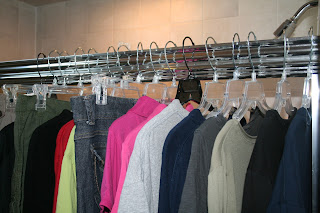 Don't get me wrong, I am not advocating that you put out your underwear on the clothesline strung across the backyard for the neighbors to see. Although, sun dried bed sheets to have a certain appeal, here in Florida, the sneaky rain shower is too much to have to worry about. I just use the sturdy plastic hangers with metal hooks that many of the department stores offer to send home home with you with your purchases. (Make sure you don't use the cheapy metal ones from the dry cleaners or they will, over time, leave rust marks on your clothes. Not good!) I hang them on the shower rod, a towel bar I mounted under a cabinet next to my washer, and even the guardrail for the stairs if I need extra room. If you don't have a strong shower bar, there are clotheslines you can install, like you might see in hotel rooms, that you can stretch across your tub/shower opening or any other small area you want to put it. Even inside the house, the clothes dry fairly quickly. I have gotten to the point where with the exception of towels, socks, most undies, and a few items that have seen the wash so many times I could care less if they died, everything else gets hung to dry. A quick shake, slip or clip it on the hanger, hook it on a clothes hook I installed on the wall next to the dryer, a quick smooth down with my hands to minimize wrinkles, and off to be hung to dry. As little as an inch or two between each item is enough to get proper circulation and they are dry in a few hours. Saves my clothes and my dryer runs significantly less. If you get some items that have too much of a wrinkle that you can't smooth out, (P.S. I really don't like to iron) after drying, I just toss them in the dryer for a quick spin in the touch up cycle for about 20 minutes on medium heat and fold right away. Looks like I spent time ironing. Not!
Another thing I don't use is fabric softener. Dryer sheets are awful for your clothes! The most noticeable example I remember is an exact same pair of olive colored shorts that both Mom & I bought at the same time. She had been using liquid fabric softener, and I was using the sheets. After a few months, my shorts had morphed to puke brown! Now, I don't use any fabric softener except regular good old white vinegar, if I need it at all. It's cheap and works great. Tip: A good use for the fabric sheets, if you want to use them up, is to use them to clean the bugs off the front of your car. Just wet and rub and the stuff somehow makes them come off easier. Then rinse. Voila!
I also make my own laundry soap, but I'll save that info for another post. I've rambled on long enough already. Have a great day!
I am rather tall, 5'11', so it can be tricky to find clothes to fit to begin with. For as long as I can remember doing my own laundry, there were certain items, I never put in the dryer or else they wouldn't fit when they came out. For instance, 100% cotton pants and 100% cotton shirts. If one accidentally snuck in with the others on the way to the dryer, the length of my tops would shrink up sometimes 3-4 inches in length and the arms would shorten 2-3 inches. Pants would be instant high-waters! Awful! It was a blessing when capri's came in style. At least I could shorten them a bit more and still salvage them. Anyway, the point of this ramble is that I noticed the items I would hang dry lasted much longer than the items going through the dryer.

Another thing I don't use is fabric softener. Dryer sheets are awful for your clothes! The most noticeable example I remember is an exact same pair of olive colored shorts that both Mom & I bought at the same time. She had been using liquid fabric softener, and I was using the sheets. After a few months, my shorts had morphed to puke brown! Now, I don't use any fabric softener except regular good old white vinegar, if I need it at all. It's cheap and works great. Tip: A good use for the fabric sheets, if you want to use them up, is to use them to clean the bugs off the front of your car. Just wet and rub and the stuff somehow makes them come off easier. Then rinse. Voila!
I also make my own laundry soap, but I'll save that info for another post. I've rambled on long enough already. Have a great day!
Subscribe to:
Posts (Atom)